Stump Grinding in Greenville, SC: Below-Grade Grinding, Surface Roots and Cleanup
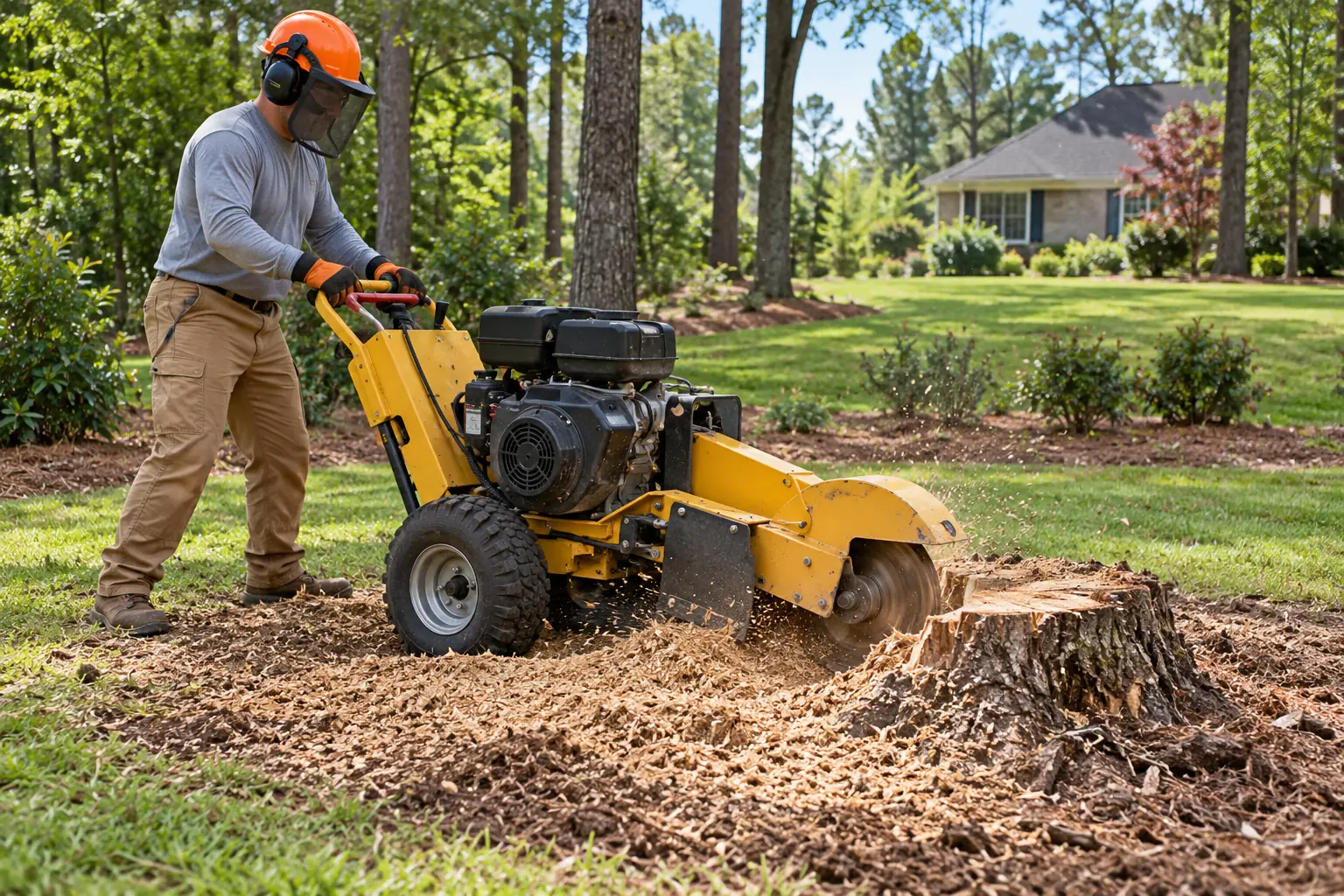
Stump grinding in Greenville, SC chips what is left of a tree 6 to 12 inches below grade, along with the surface roots within reach, and typically costs $150 to $450 for one stump, with each extra one in the same visit adding $30 to $60.
Our crew requests an SC 811 locate before every job, and our partner ISA Certified Arborist, James Martin, measures each one at ground level for a written quote and leaves the hole filled with grindings or cleaned out for replanting, as you choose.
At a glance
- Grinding depth: 6 inches below grade as standard, down to 12 inches where you plan to replant or lay sod.
- Price: $2 to $6 per inch of diameter, with a minimum service fee of about $80 to $160.
- Time: about 45 to 90 minutes of machine work for a 24-inch stump.
- Utilities: SC 811 needs 3 full working days' notice before the work starts.
- Cleanup: chips are raked into the hole and off the lawn, or hauled away as a separate line.
Stump Grinding in Greenville, SC: What the Job Includes
Stump grinding in Greenville, SC is a 4-part job: a utility locate, measuring the diameter, chipping the wood and its surface roots below grade, and cleanup.
- Stump measurement: the diameter is taken at ground level, at the widest point including the root flare, not across the cut top.
- Depth: 6 inches below grade under lawn, 8 to 12 inches where a new tree, shrub or bed will go.
- Surface roots: visible roots running out from the base are chipped in the same pass.
- Cleanup: chips are raked into the hole and off the lawn, or loaded and hauled away.
An arborist expects the deeper roots to stay in the ground and decay over the next several years, which is normal and does not harm the lawn. Sprouts from trees that sucker, such as Bradford pears and crape myrtles, usually stop once the base is chipped below grade, and any that return are cut back.
Prices by Diameter
Stump grinding in Greenville, SC costs $150 to $450 for a single job in most local and national quotes, depending on the diameter measured at ground level.
| Diameter at ground level | Typical price |
|---|---|
| Under 12 inches | $75 to $150 |
| 12 to 24 inches | $150 to $250 |
| 24 to 36 inches | $250 to $350 |
| 36 inches and up | $350 to $600 or more |
| Each extra one, same visit | $30 to $60 |
| Minimum service fee | about $80 to $160 |
At $2 to $6 per inch of stump diameter, the minimum fee often sets the price of a single small job, and bracket prices run higher than the bare per-inch rate because the root flare is wider than the cut trunk and setup is included. Each extra stump in the same visit adds $30 to $60 instead of another minimum. Dense hardwood trees such as oak, rocky soil, a slope or a narrow gate add time. The cheapest way to cut the bill is to group stumps into one visit and leave the chips on site, since haul-away is billed as a separate line. The price of taking down the tree itself is on our tree removal page, and all service prices are in the tree trimming cost guide.
Grinding vs Full Removal
A stump removal service in Greenville usually means grinding: it is the standard choice for a lawn or bed, while full removal digs out the whole root ball and is needed only for construction, a footing or a pool.
| Grinding | Full removal | |
|---|---|---|
| What it does | Chips the base and surface roots 6 to 12 inches below grade | Pulls the base and main roots out of the ground |
| Equipment | Cutter-wheel machine | Excavator or backhoe |
| What is left | Wood chips and a shallow hole | A large hole to backfill |
| Best for | Lawns, beds, planting nearby | Building pads, footings, pools |
| Relative cost | Lower | Higher, priced as excavation |
Calling SC 811 First
SC 811 must get notice at least 3 full working days before stump grinding starts, because the cutter wheel reaches below the surface where gas, power, water and cable lines can run.
- Request: our grinding crew calls 811 or files the ticket online with the address and the work area.
- Wait: 3 full working days, not counting weekends and legal holidays.
- Marks: each utility places paint or flags in the yard to show where its own lines run.
- Private lines: irrigation, landscape lighting, septic lines and pet fences are not marked by 811, so point them out before the work starts.
Replanting in the Same Spot
Replanting in the same spot after stump grinding requires clearing the chips out of the planting hole and backfilling it with topsoil.
Let the topsoil settle, and set a new tree a few feet to the side of the old base, where the old roots are not in the way. Sod or grass seed goes straight onto a topsoil layer over the ground-out area. Aged chips make good mulch for beds elsewhere, spread 2 to 3 inches deep and kept off the trunks of other trees, and the remaining trees stay healthy with regular tree pruning.
Sources
Tree Pruning Greenville last reviewed on September 26, 2026 every fact on this page against SC 811 notice rules, 2026 national price averages, the published prices of 4 local companies, and Extension replanting guidance, and you can contact us with a correction. Our methodology: each figure comes from a published source, and where sources disagree, the range covers both. On-site assessments are done by our partner arborist James Martin, ISA Certified Arborist SO-356834A.
Common Questions
How much does it normally cost to grind a stump?
The average national cost to grind a tree stump is $250 to $325, and most single jobs range from $150 to $450 each; most contractors charge $2 to $6 per inch of diameter, measured at the widest point at ground level, with a minimum fee for small jobs.
How long does it take to grind a 24 inch stump?
Grinding a 24-inch tree stump typically takes 45 to 90 minutes of active machine time, or up to 2 hours with setup and cleanup; softwoods like pine grind faster, while dense hardwoods like oak, maple or hickory take longer.
How long does it take to grind a 3 ft stump?
Grinding a 3-foot (36-inch) tree stump typically takes 45 minutes to 2 hours of active grinding, and 2 to 3 hours or more in total, depending on wood density, the age of the stump, root spread, and hidden rocks or metal.